




Japan – Rich culture, unparalleled food and warm hospitality
Japan is a country of contrasts, where past and future blend seamlessly to create a unique travel experience. From cutting-edge cities to serene natural beauty, Japan offers an opportunity to immerse yourself in a world that’s unlike any other. Recently, I was asked to put together an itinerary for a client wishing to experience the best that Japan has to offer. I was delighted, as there is so much to see…
Fascinating and unique
I’ve always felt that one of the most exciting features of Japan is how different its regions can feel, even when they’re just a few hours apart. A bullet train ride can take you from the bustling, neon-lit streets of Tokyo to the fresh, clean air of the Japanese Alps. This kind of contrast is one of the many things that make Japan a truly fascinating and unique destination.
In its rural areas, Japan’s history is beautifully preserved. A great way for travellers to experience this sense of past meeting present is to book a stay in a traditional ryokan. These inns are often located in picturesque areas, allowing you to step back in time, enjoy a slower pace of life and fully engage with Japan’s cultural heritage. My recommendation is to make sure your stay includes a soak in an onsen (hot spring) bath and a traditional kaiseki multi-course meal prepared with fresh, local ingredients before laying your head down to sleep on a bed of tatami mats.
Cultural events and culinary delights
Among the many rich cultural events throughout the year, one of the largest and most extravagant is Kyoto’s world-renowned Gion Matsuri festival. This midsummer celebration of the Yasaka Jinja Shinto Shrine is held annually throughout the month of July, and is well worth a visit, with the float processions, which take place on July 17th and 24th, always a great visual spectacle. There are street parties throughout the city on the three days preceding the processions, and the street food is not to be missed. Be warned though, this festival is massively popular, so if you’re thinking of going to Kyoto in July, I would suggest that you book your accommodation well in advance.
The street food may be one of the highlights of Gion Matsuri, but I wouldn’t be exaggerating to say that the entire country of Japan has a reputation for having a mouthwatering food scene. Because whether you’re savouring sushi in Tokyo, slurping ramen in Hokkaido or enjoying kaiseki in a ryokan, there are seemingly no end of culinary delights to whet your palette.
Ever-changing landscape, tropical escapes and powdery ski slopes
Every season in Japan sees a transformation of the landscape. One of the most famous seasonal highlights is the flowering of the delicate pink cherry blossoms, or ‘sakura,’ which come into full bloom from late March to early April. Then, in autumn, the leaves on the maple trees turn fiery reds and oranges, creating a colourful atmosphere and changing the landscape again.
But perhaps you’re looking for a tropical escape? In that case, I recommend the pristine islands of Okinawa Prefecture. Although Okinawa itself is the largest of these, altogether there are 150 islands in the prefecture, all situated between Taiwan and mainland Japan in the East China Sea. With their beautiful white-sand beaches, crystal-clear waters, and vibrant coral reefs, many of these islands are perfect for a beach stay and snorkelling.
Japan is also an attractive destination for lovers of winter sports. Niseko is the largest, most developed ski resort, famous for its beautiful, powdery snow. Situated in Hokkaido, its slopes are on the Niseko Annupuri mountain, which is over 1,300 metres high. Also popular is Hakuba, in the Japanese Alps, due to its accessibility from Tokyo.
A typical itinerary taking in the best of Japan
Having just recently compiled a Japanese itinerary for one of my clients, these are my must-see recommendations for anyone planning a multi-destination tour of Japan.
Tokyo
Home to over 12 million people, Tokyo is one of the world’s largest and most dynamic cities. It blends futuristic architecture and cutting-edge technology with deep-rooted traditions, making it a fascinating place to explore.
Tokyo’s skyscrapers, overpasses and bustling crowds may seem overwhelming, but its true charm lies in the details. From the vibrant neighbourhoods of Shibuya and Shinjuku to the peaceful temples, there’s always something new to discover. Amidst the neon lights, you can watch a sumo tournament, enjoy a traditional Kabuki performance, or savour sake in a 24-hour bar. And for gastronomes, Tokyo also boasts more Michelin-starred restaurants than any other city in the world (as of last February, there were 194 of them).
While Kyoto is famous for its gardens, Tokyo has stunning green spaces of its own. Hama Rikyu Gardens, in Chuo ward, sits alongside Tokyo Bay at the mouth of the Sumida River. From 1600-1867 it served as a duck-hunting ground for the Tokugawa shoguns, later housing an Imperial palace and being reserved for Imperial use only. Opened to the public in 1946 and set against a backdrop of skyscrapers, its landscaped gardens, quiet pools, and traditional tea houses offer a peaceful retreat from the bustle of the city.
Shinjuku Gyoen, also in Tokyo, was once an Imperial garden. Famous for its cherry blossoms and its many ponds, islands, and bridges, it is a fascinating blend of European and Japanese elements.
Of course, no visit to Tokyo would be complete without experiencing traditional Kabuki theatre. This glamorous theatrical spectacle, whose roots date back to the 17th century, combines dance, drama, decorative costumes, and acrobatics. Performances can be long, but single-scene tickets cost about 900 yen. Although this sounds expensive, it actually works out at less than £5!
Hakone
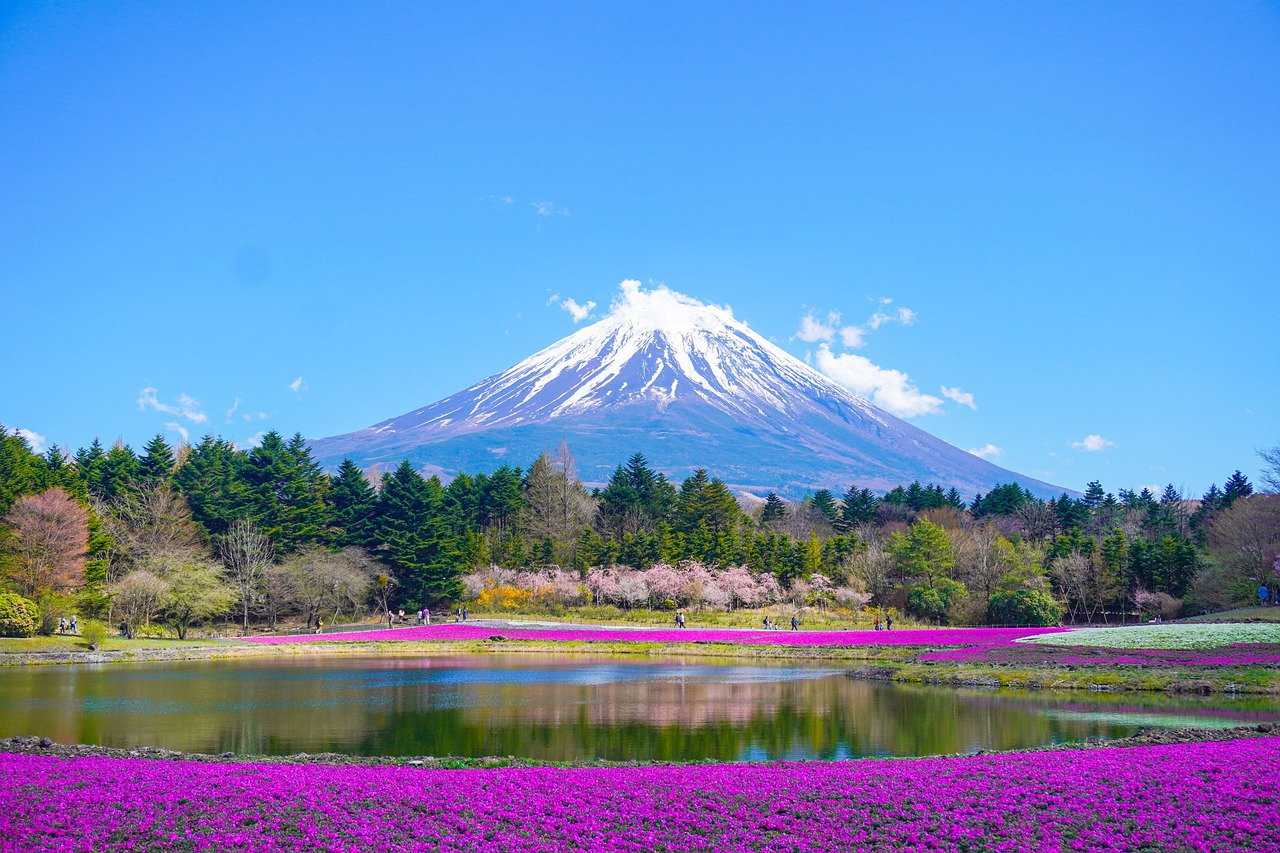
Just 50 miles west of Tokyo, Hakone is a stunning national park near Mount Fuji. This scenic area is linked by buses, cable cars, and a mountain railway winding through hills and valleys. Follow the classic sightseeing loop for stunning Mount Fuji views (weather permitting), a Lake Ashinoko cruise taking in the steaming sulphuric springs of the Owakudani Valley, and historical sites like the Hakone checkpoint. Hakone also boasts top museums, an outdoor sculpture park, the Hakone Shinto Shrine, the Picasso gallery and famous hot spring baths – perfect for relaxing after a day of sightseeing!
2-Day Hakone Freepass
One of my top tips is to pick-up a 2-Day Hakone Freepass. This will make exploring easy and allow you to receive discounts at many of the attractions. The Freepass offers unlimited travel on six transport modes, including mountain buses, a scenic railway, one of Japan’s longest cable cars, a funicular, and a pirate ship on Lake Ashi.
Kyoto
Kyoto is one of Asia’s most culturally rich cities, home to 17 UNESCO World Heritage sites, 1,600 Buddhist temples, and 400 Shinto shrines. Despite its modern grid layout, Kyoto has hidden treasures such as sacred shrines and traditional teahouses. Its world-class gardens, seasonal festivals, and refined cuisine capture the essence of traditional Japan.
Gion is Kyoto’s famous geisha district, where you can learn about the geisha world’s history, culture and traditions and perhaps enjoy a traditional tea ceremony in one of the many historic tea houses there. And if you’re lucky, you might even catch a glimpse of a geisha slipping through the backstreets on her way to an appointment!
Arashiyama is a peaceful northwest Kyoto district featuring the Tenryu-ji Temple and the scenic Togetsukyo bridge. This 155-metre wooden bridge crosses the Katsura River at the foot of the Arashiyama Mountains, is famous for its incredible views and has often been used in historical movies. It is also just a 15-minute walk from the Sagano Bamboo Forest, with its spectacularly tall bamboo trees which dwarf visitors as they walk along the pathways there.
The Sagano Romantic Train along the Hozugawa River is known for its incredible views. However you’re planning to spend your time in Kyoto, I would say that this 16km, 90-minute ride from Kameoka to Arashiyama is not to be missed, particularly if you are travelling in the spring or autumn, when the colours are at their most beautiful.
Also worth visiting during your stay in Arashiyama is the Iwatayama Monkey Park. Situated at the peak of Mount Arashiyama, it is also known as ‘Monkey Mountain,’ and is home to over 170 Japanese Macaque snow monkeys. They are native to Japan and often like to bathe in the hot springs there in the winter months.
Whilst visiting Kyoto, is there anything more Japanese than learning the traditional art of the tea ceremony? The ancient rituals surrounding the preparation and presentation of macha powdered green tea date back to the 12th century, when Buddhist monks began using tea in religious ceremonies. And whilst making the tea, why not dress for the occasion in a kimono for that extra authentic touch.
Day trip to Nara
Just 40 minutes by train from both Kyoto and Osaka, is the city of Nara. Japan’s first capital in the 8th century retains plenty of historical significance and is well worth a visit. Daibutsu, a 15-metre high bronze buddha, is on permanent display at Todai-ji Temple, which is located in Nara Park, where deer run free. And on the eastern side of the park is the Shinto shrine Kasugo Taisha, which also dates back to the 8th century.
Hiroshima
Hiroshima, known worldwide for the tragic events of World War II, has rebuilt itself into a lively, modern city. The Hiroshima Peace Memorial Park is home to the Hiroshima Peace Memorial Museum, which was opened in 1955 in memory of those who lost their lives when an atomic bomb hit the city towards the end of the war. Photos and belongings of many of the victims are on permanent display there.
On a lighter note, the Mazda Zoom-Zoom Stadium in the city is home to the Hiroshima Toyo Carp baseball team and the Shukkei-en Garden, a delightful miniature landscape garden dating back to the 17th century, is perfect for a relaxing stroll. And for art lovers, there is the Hiroshima Prefectural Museum of Art, which features works by both Japanese and Western artists.
Last, but not least, don’t miss the local specialty, okonomiyaki, which means ‘what you like’. This is a cabbage-based pancake which you fill with your favourite ingredients and cook on a hot plate at your table. Delicious!
Miyajima Island
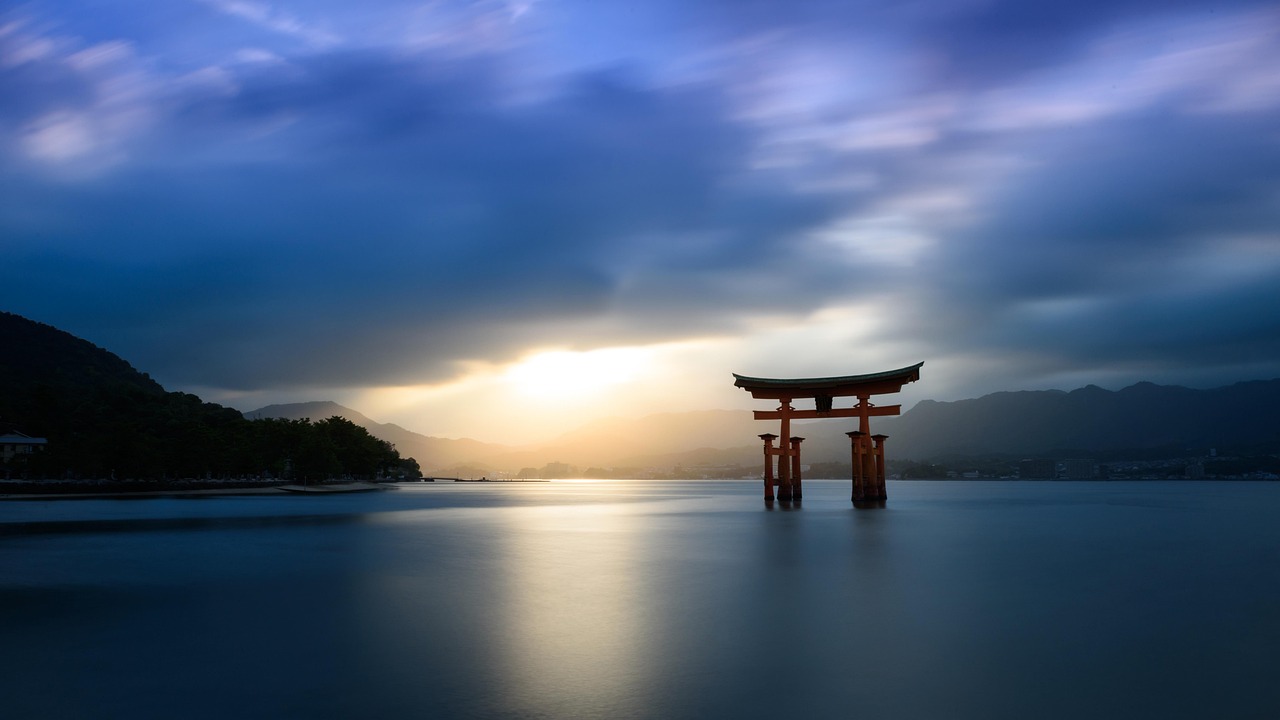
From Hiroshima, I’d suggest you take a half-day trip to Miyajima Island (also known as Itsukushima Island), set in the Inland Sea National Park. On the ferry out to the island, you will pass by the O-Torii, also known as the Grand Torii Gate, which forms part of the Itsukushima Shine. Standing in the sea at 16.8 metres high, it’s hard to miss! Ranked as one of the ‘top three sights’ in Japan, it is also a UNESCO World Heritage site. The shrine complex takes in most of the island, including Mount Misen (whose peaks are considered to be sacred) and the surrounding forests. Take the cable car to the top of the mountain for wonderful scenic views of the whole area.
Osaka
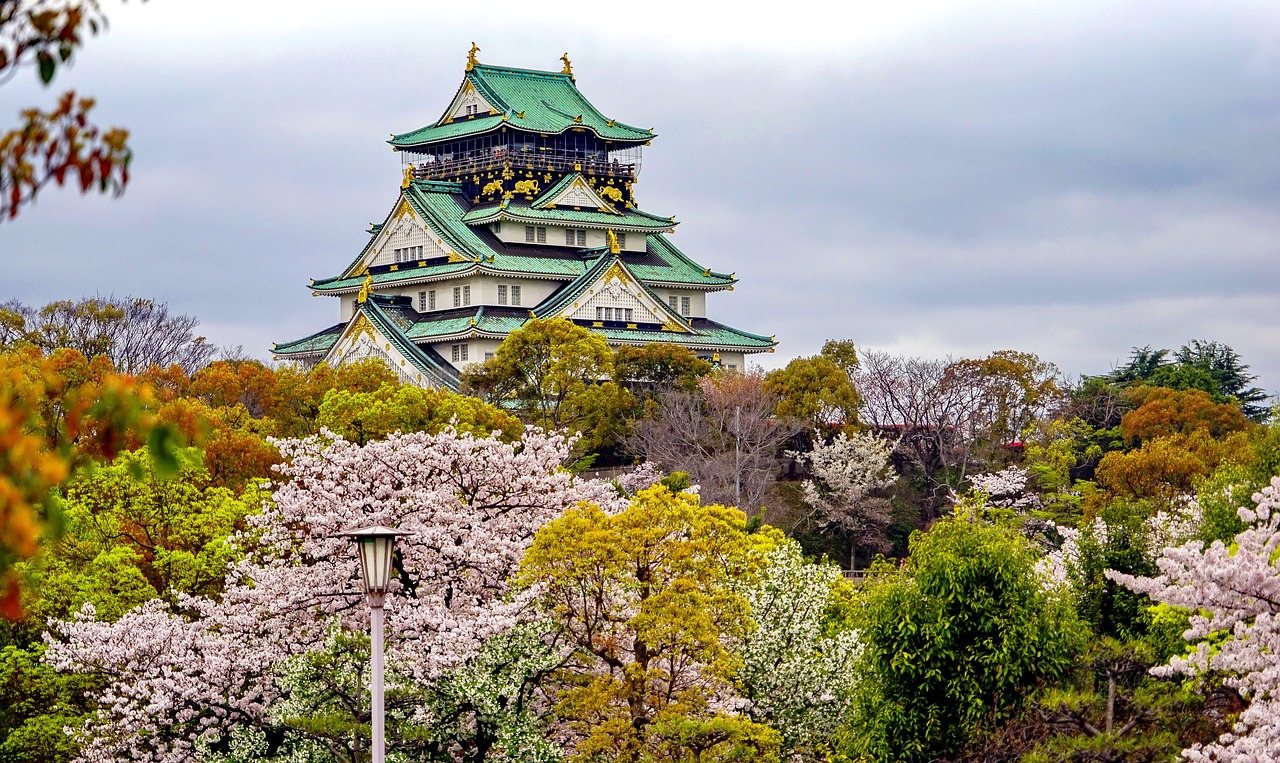
Osaka, Japan’s second-largest city, is a bustling metropolitan hub known for street food, neon lights, and nightlife. There are few tourist sights here, but life on the streets is what makes this city worth a visit. There are many restaurants, (several Michelin-starred, but also inexpensive street food), bars and all-round entertainment available. The main tourist attraction is Osaka Castle, which dates back to the 16th century and sits within a moat, surrounded by beautiful cherry-blossom, peach and plum trees. Also worth a visit is the Sumiyoshi-taisha, which is one of the oldest Shinto shrines in the country. And don’t leave the city without having sampled the local delicacy, takoyaki (octopus dumplings).
Takayama
Takayama offers a glimpse into a traditional way of life that has disappeared from modern Japan. Nestled in the Hida Mountains, it is known for its well-preserved Edo-period architecture and variety of local crafts. When walking the narrow streets of the town, you will notice plenty of woodwork, pottery and textiles on display. The streets are also lined with traditional inns, tea houses, and merchant homes.
Just outside Takayama is the open-air museum, the Hida Folk Village, where you can admire the gasshō-zukuri traditional style buildings, with their thatched and shingled rooves. And my personal top tip is not to miss the morning market along the Miyagawa River, offering local produce, flowers and crafts, followed by a visit to one of the town’s micro sake breweries to sample the local brew.
Kanazawa
Kanazawa, on Honshu Island, offers a mix of history and modern art, and is home to the Kenrokuen Garden. Dating back to the 17th century, this is considered by many to be the finest landscaped garden in all of Japan. Whilst there, don’t miss the Seisonkaku Villa nearby. The Ninjadera Temple is also fascinating, with its many secret doors, hidden corridors and traps. You can take tea in the Higashi Chaya geisha district and visit the 21st Century Museum of Contemporary Art. Here, you can experience time-honoured crafts like gold leaf, weaving, lacquerware, indigo dyeing and, best of all, samurai sword-making with a local expert!
Transport
Japan’s transport system is modern, efficient and reliable, so getting around is pretty easy. The Shinkansen (bullet trains) are high-speed trains that connect the major cities, including Tokyo, Osaka, and Kyoto. Another top tip; if you’re staying for more than a few days, a 14-day Japan Rail Pass offers unlimited travel on the Japan Railways network. This includes bullet trains, although there are exceptions. I’d recommend that you always book a seat in advance. But don’t worry, this won’t cost any extra, as reservations are free.
Luggage Forwarding
Public transport tends to have limited luggage space, but a great way around this is to use Japan’s luggage forwarding service. It’s so efficient! You just send the bulk of your luggage ahead of you and travel light with an overnight bag (just in case!). Luggage forwarding is easy to arrange and can be done at most hotel front desks. The service offers next-day delivery, but your hotel can hold your bags if they arrive early.
Warm Japanese hospitality and a tailored itinerary
The Japanese spirit of ‘omotenashi,’ or selfless hospitality, is evident everywhere you go. From attentive hotel staff to shopkeepers who provide a warm welcome, this kindness and respect extend to foreign visitors as well as Japanese nationals.
So whether you’re looking to explore ancient traditions or to dive into a fast-paced urban lifestyle, Japan’s rich culture, unparalleled food and warm hospitality will ensure that every moment is unforgettable.
If this blog has inspired you to consider a trip to Japan, please get in touch [add email link].
If you have a particular interest, I can tailor a Japanese itinerary to suit and can include a variety of experiences that won’t fail to immerse you in the history and culture of this magical land.

